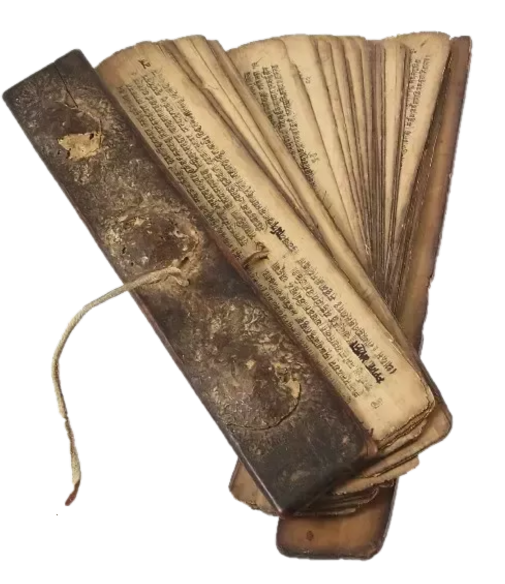
Māndukyōpanishad Bhāshya
- by Sri Madhvāchārya
अभ्रमं भङ्गरहितं अजदं विमलं सदा। आनन्दतीर्थं अतुलं भजे तापत्रयापाहं॥
abhramaṁ bhaṅgarahitaṁ ajadaṁ vimalaṁ sadā। ānandatīrthaṁ atulaṁ bhajē tāpatrayāpāhaṁ॥
Worship of Anandatheertha, who is always flawless, unobstructed, ardent, and pure, removes all afflictions.
(Translated by Madhukrishna Sudhindra)

  • ॥ हरिः ॐ ॥ (Lord Hari is only Ōm!)
    Bhā.: I bow to Lord Vishnu, the supreme abode, embodying complete bliss, knowledge, and power, eternal and unchanging, the enjoyer of all in fourfold ways.
  • Māndukya 1.01
    omity etad akṣaram idaṃ sarvam। tasyopavyākhyānaṃ bhūtaṃ bhavad bhaviṣyad iti। sarvam oṅkāra eva। yac cānyat trikālātītaṃ tad apy oṅkāra eva ॥1॥
    "Om" is the essence of everything. It encompasses the past, present, and future. Everything is indeed Om, and anything beyond these three times is also Om.
    Bhā.: Testimonials from Pamda-Purana, Bṛhat-Saṃhitā, and Nairguṇya that are closer to the hermeneutic horizon of the Upanishad are quoted to set the right context. Traditionally, the Upanishad mantras are believed to be praises uttered by the god Varuna in the form of a frog to Lord Narayana.
    By stating, "All is indeed Om," the completeness of anything else is rejected.
    In nature, the transcendence of the three times exists, and is unique, and belongs solely to Lord Hari.
  • Māndukya 1.02
    sarvaṁ hyetad brahma। ayamātmā brahma। so'yamātmā catuṣpāt ॥2॥
    All this is indeed Brahman. "This Ātmān is Brahman". This self has four aspects.
    Bhā.: "All this is indeed Brahman" - indicates that fullness is that of Brahman, and no one else. To explain "This Ātmān is Brahman", a testimonial from Harivamsa is referenced where the utterances of Varuna in the form of a frog specifically explains Māndukyōpanishad. The text suggests that within all bodies, starting from the divine Brahman, there exists an entity perceived as the doer of actions. Observing the lack of independence among beings, it is demonstrated that this entity is indeed the Ātmān, which is Brahman.
  • Māndukya 1.03
    jāgaritasthāno bahiḥprajñaḥ। saptāṅga ekonaviṃśatimukhaḥ sthūlabhug vaiśvānaraḥ prathamaḥ pādaḥ ॥3॥
    In the waking state, the consciousness is directed outward, characterized by seven limbs and nineteen mouths, and it experiences the gross objects. The first form of the lord that giverns this is known as Vaiśvānara.
    Bhā.: A testimonial from the ancient text of Mahāyog is referenced, explaining the four forms of Lord Vishnu, the first being 'Vaiśvānara'. He is called 'Viśvaṃ', i.e. the Universal, as He is perceptible to all in gross form as the Universe, and also is the cause of all. He is also 'Nara' i.e. the man, associated with that Universal form, who is without destruction, hence is called 'Vaiśvānara'.
  • Māndukya 1.04
    svapnasthāno'ntaprajñaḥ। saptāṅgaḥ ekonaviṃśatimukhaḥ praviviktabhuk taijaso dvitīyaḥ pādaḥ ॥4॥
    In the state of dreams, the inner consciousness is seven-limbed, with nineteen mouths, enjoying subtle objects. The second aspect of the Lord during this process is known as 'taijasa', the luminous one.
    Bhā.: The impressions formed during the waking state shape the dream state, which is distinct, and is the cause of knowledge, the inner knower. The Lord's form known as 'taijasa', the luminous one, governs this process.
  • Māndukya 1.05
    yatra supto na kañcana kāmaṃ kāmayate na kañcana svapnaṃ paśyati tat suṣuptam। suṣuptasthāna ekībhūtaḥ prajñānaghana evā'nandamayo hyānandabhuk cetomukhaḥ prājñastṛtīyaḥ pādaḥ ॥5॥
    The state of sleep, where one does not desire anything nor sees any dreams, is called 'suṣupta', i.e. deep-sleep state. In that deep-sleep state the dense being that has become one is carried by the 'prajña', i.e. the wise form of the Lord, who is full of bliss, who is the experiencer of bliss without having the need for sense enjoyment, who has the face that is of the form of knowledge. This third aspect of the Lord is called 'Prājña', i.e. the wise one.
    Bhā.: The word 'ānandamaya' conveys complete bliss. The term 'cetomukhaḥ' is characterized by a face, that is of the form of knowledge. The term 'prajñānaghana' is the conjunction of 'prajñāna' i.e. knower and 'ghana' i.e. heavy addressed to ignorant being in deep sleep, in reverse. It should be interpreted as 'ghana-prajña', i.e. the wise one who carries the heavy ignorant being. This is made clear in the future usages (7th verse). The term 'ānandabhuk', i.e. 'enjoyer of bliss' is used to distinctinguish experiencing bliss without the need for sense enjoyment. The qualities of being blissful, conscious, omniscient, and supreme are equally present in all four aspects of the Lord. However, for the purpose of elaboration, the states of being blissful and having a face that is of the form of knowledge are mentioned together. A testimonial from the ancient text, Prakāśikā, is referenced to clarify the usage that is near to the hermeneutic horizon.
  • Māndukya 1.06
    eṣa sarveśvaraḥ eṣa sarvajñaḥ eṣo'ntaryāmī। eṣa yoniḥ sarvasya prabhavāpyayau hi bhūtānām ॥6॥
    This is the Lord of all, this is the omniscient, this is the inner controller. Indeed, this is the source of all, the origin and dissolution of beings.
    Bhā.: The supreme Ātmān existing within all beings in fourfold form, and all these forms are full of complete bliss. Indeed, all of them have a face that is of the form of consciousness, and are of the nature of complete knowledge. As the lord himself is primarily of the nature of knowledge, the term 'mukha', i.e. 'face', 'primary', is used. The nature of complete bliss is such that its play and enjoyment are inherent and not different, just as there is no distinction made by a lamp to the sun. Ancient texts of the Markandeya Purana and the Brahmatarka which are near to the hermeneutic horizon, are referenced to clarify the point.
  • Māndukya 1.07
    atraite ślokā bhavanti ।
    Here are these verses:
    bahiḥprajño vibhurviśvo hyantaḥprajñastu taijasaḥ। ghanaprajñastathā prājña eka eva tridhā smṛtaḥ ॥7॥
    The all-pervading outwardly conscious in the form of 'Viśva', i.e. universal, is indeed also the inwardly conscious, called 'Taijasa' i.e. luminous, and in the form of 'Prājña', i.e. the wise one, carries the heavy and ignorant being; thus remembered to be three-fold.
    Bhā.: The authenticity of the earlier textual evidence is reinforced by the current textual evidence when they are aligned. In the Garuda Purana, section four, while commenting on this verse, it is stated, Lord Varuna reinforced the ideas by quoting the verses seen by Lord Brahma.
  • Māndukya 1.08
    dakṣiṇākṣimukhe viśvo manasyantastu taijasaḥ। ākāśe ca hṛdi prājñastridhā dehe vyavasthitaḥ ॥8॥
    The universal aspect, 'Viśva', is situated in the right eye, the luminous aspect, 'Taijasa', in the mind, and the wise aspect, 'Prājña', is situated in the space within the heart, all threefold within the body.
  • Māndukya 1.09
    viśvo hi sthūlabhuk nityaṃ taijasaḥ praviviktabhuk। ānandabhuk tathā prājñastridhā bhogaṃ nibodhata ॥9॥
    Understand, that he the Lord makes the being enjoy experience all the time in three ways: in the universal form, 'Viśva', consumes the gross, in the luminous form, 'Taijasa', consumes the subtle, and the wise one, 'Prājña', makes him experience bliss.
  • Māndukya 1.10
    sthūlaṃ tarpayate viśvaṃ praviviktaṃ tu taijasam। ānandaṃ ca tathā prājñaṃ tridhā tṛptiṃ vijānatha ॥10॥
    The gross aspect satisfies the universal form, 'Viśva', while the dream state satisfies the luminous form, 'Taijasa', and the bliss satisfies the wise form, 'Prājña' - thus understand the threefold satisfaction.
  • Māndukya 1.11
    triṣu dhāmasu yad bhojyaṃ bhoktā yaśca prakīrtitaḥ। vedaitadubhayaṃ yastu sa bhuñjāno na lipyate ॥11॥
    In the three realms, the proclaimed food and enjoyer, he who knows both, while partaking, remains untainted.
  • Māndukya 1.12
    prabhavaḥ sarvabhāvānāṃ satāmiti viniścayaḥ। sarvaṃ janayati prāṇaścetoṃ'śūn puruṣaḥ pṛthak ॥12॥
    The origin of all beings is certainly in the good. The person individually creates all aspects of life and mind.
    Bhā.:
  • Māndukya 1.13
    Bhā.:


...

बहुचित्रजगद्बहुधाकरणात् परशक्तिरनन्तगुणः परमः ।
सुखरूपममुष्य पदं परमं स्मरतस्तु भविष्यति तत्सततम् ॥
"The one who has created this variegated vast universe with varied forms has infinite power and is of infinite auspicious qualities. He certainly bestows the highest state of bliss to those who meditate on his ever happy essence." -Dwādasha stōtra 4.3

Copyright © 2025, Incredible Wisdom.
All rights reserved.