...

About madhva.in

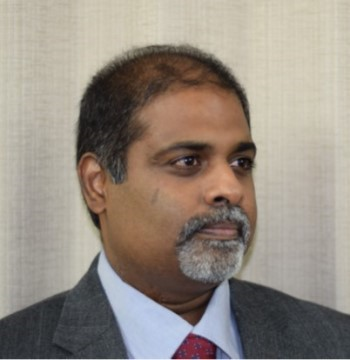
Investigating India's ancient intellectual tradition and its practical knowledge is my passion as a student of Indian philosophy. For those who can't understand Sanskrit, it's hard to get a hold of Madhvāchārya's original writings. Here is an effort to bring awareness of his writings to a larger audience and also to make his work accessible to all.

It is time for all of us to reflect on our ancestral heritage with a scientific temper and adopt, nurture and take pride in its practical wisdom. Their importance is much greater in our hectic, overindulged lives today than it was thousands of years ago.

If you have any questions, just drop me a line using the address at the bottom.

Regards,
Madhukrishna Sudhindra
(MA Philosophy, BE Computer Science)


Translation Methodology

  1. It all started around 1998, with my desire to understand Madhvacharya’s philosophy. I began studying the Gita Prasthana using the books then published by Vidyapeetha and started making detailed notes. I soon realised that the available English rendering was not a sentence-by-sentence translation, but more of a purport. I therefore began working directly with the Sanskrit, trying to understand each sentence individually and record its meaning as closely as possible. This gradually fascinated me with Madhvacharya’s style of writing, and what began as personal notes slowly transformed into a translation effort.

    I continued this work despite foreign travel, marriage, and the demands of professional life. Around 2002, I published my first translation of the Gita Bhashya, along with translations of Tatva Sankhyana and Tatva Viveka.

  2. There was then a long gap during which much of my attention shifted to the Mahabharata and to professional work.

  3. My desire to translate the Sarvamoola was reignited around 2021, when I began pursuing my M.A. in Philosophy. Since then, I have been working on the project consistently.

  4. Until around 2023, translation was a cumbersome process. I would often sit with three reference dictionaries around me, looking up individual words and trying to determine their meaning in context.

  5. Initially, I used ChatGPT mainly as an advanced dictionary and reference tool. As its capabilities improved, I gradually began using it for more substantial assistance in understanding Sanskrit words, grammatical constructions, and passages.

  6. Around 2025, my son Saatwik suggested that I use the OpenAI APIs for the translation work. This significantly changed the workflow. Instead of using AI merely as a reference tool, I could now process larger portions of text and generate preliminary translations of verses and prose passages.

    The quality, however, was still not sufficient for direct publication. Almost every sentence required manual review and correction. Nevertheless, the generated translation provided a useful backbone on which I could build. Using this combined method, I have already completed translations of the Gita Prasthana, the first seven Upanishads, and several Prakarana and Sankirtana Granthas.

  7. With the recent GPT-5.6 Sol model, I am seeing a significant improvement in translation quality. In my present experience, around 70% of the generated translation now requires little or no substantial correction at the draft stage. Considering the large volume of work that still remains to be translated, I am therefore proposing the following revised workflow:

    1. Source preparation: Obtain the Sanskrit text from reliable online sources wherever available. A major source for this work since 2022 has been Anandamakaranda, which has made a large body of carefully prepared Sanskrit texts readily accessible and has been of great help in this translation effort. Where a reliable digital text is unavailable, printed editions are scanned and converted into editable text using OCR.

    2. Text verification: Run the digitised Sanskrit through ChatGPT to identify obvious OCR errors, typographical mistakes, and textual anomalies. The Sanskrit source itself remains primary, and doubtful readings are to be checked rather than automatically corrected.

    3. Draft translation: Process the verified Sanskrit through a carefully developed Sanskrit translation workflow in collaboration with GPT-5.6 Sol. The resulting translation will be clearly marked DRAFT.

    4. Manual review and publication: Every translated passage will subsequently be reviewed manually. Required corrections will be incorporated, along with explanatory notes wherever necessary. During this stage, the work will be marked UNDER REVIEW. Only after the complete manual review is finished will it be marked PUBLISHED.

This methodology allows AI to reduce the mechanical effort involved in translation without transferring the responsibility for the final translation to AI. The machine-generated translation remains a draft; textual judgement, interpretation, correction, and final responsibility continue to remain with the human translator.

...

बहुचित्रजगद्बहुधाकरणात् परशक्तिरनन्तगुणः परमः ।
सुखरूपममुष्य पदं परमं स्मरतस्तु भविष्यति तत्सततम् ॥
"The one who has created this variegated vast universe with varied forms has infinite power and is of infinite auspicious qualities. He certainly bestows the highest state of bliss to those who meditate on his ever happy essence." -Dwādasha stōtra 4.3

Source and Copyright: The Sanskrit works of Madhvacharya reproduced here are ancient public-domain texts. Digital Sanskrit sources are acknowledged wherever applicable. The English translations, explanatory notes and original editorial material on madhva.in are © Madhukrishna Sudhindra, unless otherwise indicated.