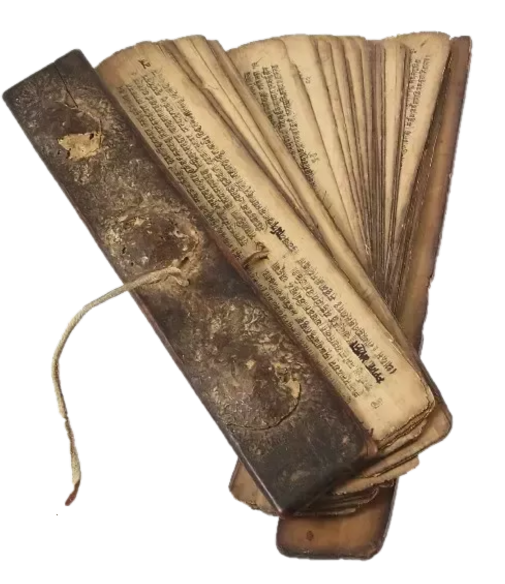
Chapter Two (द्वितीयोध्यायः)
यस्य कस्यापि मन्त्रस्य न्यासः पञ्चाशदक्षरैः। वीर्यदः केभितो वक्त्रमक्षिकर्णेषु नासयोः ॥१॥
गण्डयोरोष्ठयोर्दन्तपङ्क्त्योर्मूर्ध्नि वाचि च। दोःपत्सन्धिषु साग्रेषु पार्श्वयोः पृष्ठगुह्ययोः ॥२॥
तुन्दे च हृदि धातूनां सप्तके प्राणजीवयोः। सक्षकारान् न्यसेद्वर्णान् नृसिंहः क्षस्य देवता ॥३॥
The potency-bestowing ritual placement of any mantra whatsoever should be performed with the fifty letters, including kṣa, placing them on the head, around the face, on the eyes and ears, the two nostrils, both cheeks, both lips, the two rows of teeth, the crown of the head, and in speech; at the joints and extremities of the arms and feet; and on the flanks, back, genitals, belly, heart, seven bodily constituents, vital breath, and individual self. Nṛsiṃha is the presiding deity of kṣa. (1–3)
~~~
जपे न्यासे च विहितः क्षोक्षराणां सदान्ततः। प्राणायामो रेचयित्वा पूरयित्वा च कुम्भके ॥४॥
तारैस्त्रिर्द्वादशावृत्तैर्द्व्येकद्वादशकेन वा। तत्तन्मन्त्रेण वा कार्यो गायत्र्या दशतारकैः ॥५॥
In recitation and ritual placement, the syllable kṣa is always prescribed as the last of the letters. Prāṇāyāma should be performed by exhaling, inhaling, and retaining the breath, using praṇavas repeated twelve times in each of three rounds, two or one sets of twelve, the respective mantra, or the Gāyatrī together with ten praṇavas. (4–5)
~~~
आदावेव जपे कुर्याच्छोषणं दहनं प्लुतिम्। वाय्वग्निवारुणैर्बीजैर्ध्यात्वा तन्मण्डले हरिम् ॥६॥
At the very beginning of recitation, one should perform drying, burning, and inundation with the seed syllables of wind, fire, and water after meditating on Hari in the corresponding maṇḍala. (6)
~~~
एकपञ्चाशद्वर्णानां चतुर्विंशतिमूर्तयः। आत्माद्या वासुदेवाद्या विश्वाद्या मत्स्यकच्छपौ ॥७॥
कोलो नृसिंहः सवटुर्जामदग्न्यरघूद्वहौ। वासिष्ठयादवौ कृष्णावात्रेयो बुद्धकल्किनौ ॥८॥
Among the forms of the fifty-one letters are the twenty-four forms; those beginning with Ātman, Vāsudeva, and Viśva; Matsya and Kacchapa; Kola; Nṛsiṃha together with Vaṭu; Jāmadagnya and the scion of Raghu; the two Kṛṣṇas, Vāsiṣṭha and Yādava; Ātreya; Buddha; and Kalkin. (7–8)
~~~
शिंशुमारश्चेति शतं कलाः कलशनामकाः। एताभिः सहितां मूलमूर्तिं कुम्भोदके सुधीः ॥९॥
पूर्वोक्तविधिनाभ्यर्च्य प्रतिमां शिष्यमेव च। स्नापयेत् पूर्वमर्चायां जपोनूनः सहस्रतः ॥१०॥
Śiṃśumāra is also included; thus there are one hundred kalās known as kalaśas. After worshipping the principal form, accompanied by these in the vessel water, as well as the image and the disciple, according to the previously stated procedure, the wise practitioner should first bathe the image and disciple. During the worship, there should be no fewer than one thousand recitations. (9–10)
~~~
मूलमन्त्रस्य चाङ्गानां न्यासः स्नानादनन्तरम्। प्रतिमायां सन्निधिकृच्छिष्ये माहात्म्यकृद्भवेत् ॥११॥
After the bathing, the ritual placement of the root mantra and its limbs should establish presence in the image and confer greatness on the disciple. (11)
~~~
कलशः कीर्तिमायुष्यं प्रज्ञां मेधां श्रियं बलम्। योग्यतां पापहानिं च पुण्यवृद्धिं च साधयेत् ॥१२॥
The kalaśa ritual vessel should bestow fame, longevity, discernment, retentive intelligence, prosperity, strength, fitness, the destruction of sin, and an increase in merit. (12)
~~~
उपसर्गेषु जातेषु दैवभूतात्महेतुषु। आयुषे वाथ शान्त्यै वा श्रिये वा पुण्यवृद्धये ॥१३॥
योग्यतायै मन्त्रसिद्ध्यै विष्णोः प्रीत्यर्थमेव वा। जुहुयात् सहस्रमयुतं लक्षं कोटिमथापि वा ॥१४॥
When afflictions caused by divine forces, beings, or oneself arise—or to obtain longevity, pacification, prosperity, increased merit, fitness, accomplishment of the mantra, or simply to please Viṣṇu—one should make one thousand, ten thousand, one hundred thousand, or even ten million offerings. (13–14)
~~~
पूर्ववत्संस्कृते वह्नौ ध्यात्वा देवं जनार्दनम्। कृत्वा त्रिमेखलं कुण्डं चतुर्विंशाङ्गुलोच्छ्रितम् ॥१५॥
तावत्खातं चतुष्कोणमुच्छ्रितं द्वादशैव वा। द्व्यङ्गुलं त्र्यङ्गुलं वापि चतुरङ्गुलमेव वा ॥१६॥
विस्तारो मेखलानां स्यादन्त्या वा चतुरङ्गुला। चतुर्विंशाङ्गुलं वा तद्विस्तारो द्वादशैव वा ॥१७॥
Having meditated upon Lord Janārdana in the fire consecrated as before, one should make a square fire-pit with three enclosing bands. It should be raised twenty-four aṅgulas and excavated to the same measure, or alternatively raised only twelve aṅgulas. The bands should be two, three, or four aṅgulas wide; alternatively, the outermost band should be four aṅgulas wide. Its overall extent should be twenty-four aṅgulas, or only twelve. (15–17)
~~~
अश्वत्थपत्राकृतिः स्यान्मूलतो द्वादशाङ्गुला। योनिः खाते च विनता प्रविष्टा द्व्यङ्गुलं तथा ॥१८॥
The yoni should be shaped like an aśvattha leaf and measure twelve aṅgulas from its base; sloping downward, it should extend two aṅgulas into the pit. (18)
~~~
तदात्मनि हरिं ध्यात्वा कुण्डे देवीं श्रियं तथा। विष्णुवीर्यात्मकं वह्निं निक्षिपेत् प्रणवेन हि ॥१९॥
Having meditated upon Hari within oneself and upon the goddess Śrī in the fire-pit, one should place the fire, which is of the nature of Viṣṇu’s seed, there with the praṇava. (19)
~~~
कुर्यात् क्रियाः षोडश च व्याहृतीभिः पृथक् पृथक्। वह्नेस्तद्गहरेः प्रीतिं कुर्वन् द्रव्यैर्यजेत्ततः ॥२०॥
आज्येन वा पायसेन समिद्भिः क्षीरिणामथ। तिलैर्वाथ तण्डुलैर्वापि मधुरैस्त्रिभिरेव वा ॥२१॥
ब्रह्मवृक्षसमिद्भिर्वा समिद्भिर्वामृतोद्भवैः। अमृताः समिधो ज्ञेयाः सर्वत्र चतुरङ्गुलाः ॥२२॥
He should perform each of the sixteen rites separately with the vyāhṛtis. Then, pleasing both the fire and Hari present within it, he should make offerings of ghee, milk-rice, fuel sticks from trees that yield milky sap, sesame seeds, rice grains, the three sweet substances alone, fuel sticks from the Brahma tree, or fuel sticks arising from amṛta. The fuel sticks should be regarded as amṛta and should always be four aṅgulas long. (20–22)
~~~
एवमेव तु दीक्षायामाज्येनैवाहुतिक्रिया। पूजा च कार्या विधिवत् पूर्वं सर्वहुतेष्वपि ॥२३॥
In exactly the same way, during initiation the oblations should be made with ghee alone. Before all sacrificial offerings, worship should also be performed according to the prescribed procedure. (23)
~~~
गुरवे दक्षिणां दद्यात् लक्षे लक्षे शतं सुधीः। आत्मनैव कृते होमे शक्तितो गुरुदक्षिणाम् ॥२४॥
For every hundred thousand offerings, the wise practitioner should give the guru one hundred as an honorarium. When one performs the homa oneself, one should give the guru an honorarium according to one’s means. (24)
~~~
इति श्रीमदानन्दतीर्थभगवत्पादाचार्यविरचिते तन्त्रसारसङ्ग्रहे द्वितीयोध्यायः॥
Thus ends the second chapter of the Tantrasārasaṅgraha, composed by the venerable Ānandatīrtha Bhagavatpādācārya.