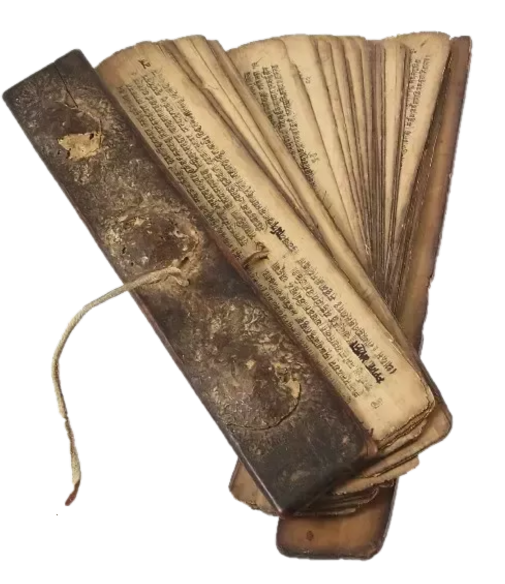
Chapter One (प्रथमाध्यायः)
जयत्यब्जभवेशेन्द्रवन्दितः कमलापतिः। अनन्तविभवानन्दशक्तिज्ञानादिसद्गुणः ॥१॥
Glory to the Lord of Kamalā, revered by lotus-born Brahmā, Śiva, and Indra and endowed with auspicious qualities such as infinite majesty, bliss, power, and knowledge. (1)
~~~
विधिं विधाय सर्गादौ तेन पृष्टोब्जलोचनः। आह देवो रमोत्सङ्गविलसत्पादपल्लवः ॥२॥
At the beginning of creation, the lotus-eyed Lord created Vidhi. When Vidhi questioned him, the Lord—whose tender, shoot-like feet shine in Ramā’s lap—replied: (2)
~~~
अहमेकोऽखिलगुणो वाचकः प्रणवो मम। अकाराद्यतिशान्तान्तः सोयमष्टाक्षरो मतः ॥३॥
I alone possess all attributes, and the praṇava denotes me. This praṇava, beginning with akāra and ending with atiśānta, is regarded as eight-syllabled. (3)
~~~
स विश्वतैजसप्राज्ञतुरीयात्मान्तरात्मनाम्। परमात्मज्ञानात्मयुजां मद्रूपाणां च वाचकः ॥४॥
It also denotes my forms known as Viśva, Taijasa, Prājña, Turīya, Ātman, Antarātman, Paramātman, and Jñānātman. (4)
~~~
तद्रूपभेदाः पञ्चाशन्मूर्तयो मम चापराः। पञ्चाशद्वर्णवाच्यास्ता वर्णास्तारार्णभेदिताः ॥५॥
There are also fifty further forms of mine, which are differentiations of these forms. They are denoted by the fifty phonemes, which are themselves differentiated by the Tāra phoneme. (5)
~~~
द्विरष्टपञ्चकचतुःपञ्चेत्येवाष्टवर्गगाः। अज आनन्द इन्द्रेशावुग्र ऊर्ज ऋतम्भरः ॥६॥
Their eight classes contain, respectively, sixteen members, five groups of five, four members, and five members. The sequence of names begins with Aja, Ānanda, Indra, Īśa, Ugra, Ūrja, and Ṛtambhara. (6)
~~~
ॠघलृशौ लॄजिरैकात्मैर ओजोभृदौरसः। अन्तोऽर्धगर्भः कपिलः खपतिर्गरुडासनः ॥७॥
The sequence continues with Ṝgha, Lṛśa, Lṝji, the One Self, Aira, the Bearer of Vigor, the Naturally Begotten One, the End, the Half-Wombed One, Kapila, the Lord of Space, and He Whose Seat Is Garuḍa. (7)
~~~
घर्मो ङसारश्चार्वङ्गश्छन्दोगम्यो जनार्दनः। झटितारिर्ञमष्टङ्की ठलको डलको ढरी ॥८॥
The names continue with the Sacrificial Heat, the Essence of ṅ, the Beautiful-Limbed One, the One Knowable through the Vedas, Janārdana, the Instant Foe, Ñamaṣṭaṅkī, Ṭhalaka, Ḍalaka, and Ḍharī. (8)
~~~
णात्मा तारस्थमो दण्डी धन्वी नम्यः परः फली। बली भगो मनुर्यज्ञो रामो लक्ष्मीपतिर्वरः ॥९॥
The sequence continues with He Whose Essence Is ṇa, the Deliverer, the Restrainer, the Staff-Bearer, the Bow-Bearer, the One Worthy of Reverence, the Supreme, the Fruit-Bearing One, the Powerful One, the Lordly One, Manu, the Sacrifice, Rāma, the Lord of Lakṣmī, and the Excellent One. (9)
~~~
शान्तसंवित् षड्गुणश्च सारात्मा हंसळाळुकौ। पञ्चाशन्मूर्तयस्त्वेता ममाकारादिलक्षकाः ॥१०॥
It concludes with Śāntasaṃvit, Ṣaḍguṇa, Sārātman, Haṃsa, and Ḷāḷuka. These are my fifty forms, characterized by the letters beginning with a. (10)
~~~
नारायणाष्टाक्षरश्च ताराष्टाक्षरभेदवान्। आद्यैस्तारचतुर्वर्णैर्भिन्ना व्याहृतयः क्रमात् ॥११॥
The eight-syllabled Nārāyaṇa mantra also has variants corresponding to the eight syllables of Tāra. The vyāhṛtis are differentiated in sequence by the first four phonemes of Tāra. (11)
~~~
अनिरुद्धादिकास्तासां देवता व्युत्क्रमेण वा। ताश्चतुर्मूर्तयस्त्वेव द्वादशार्णपदोदिताः ॥१२॥
Aniruddha and the others are their deities, though the order may instead be reversed. These, however, are precisely the four forms specified in the twelve-syllabled formulas. (12)
~~~
नारायणाष्टाक्षराच्च व्याहृतिभ्यस्तथैव च। विभेदो द्वादशार्णानां केशवाद्याश्च देवताः ॥१३॥
The twelve-syllabled mantras are differentiated from the eight-syllabled Nārāyaṇa mantra and, in precisely the same way, from the vyāhṛtis. Their deities are Keśava and the others. (13)
~~~
नारायणाष्टाक्षराच्च व्याहृतित्रिगुणात् पुनः। वेदमाता च गायत्री द्विगुणा द्वादशाक्षरात् ॥१४॥
Similarly, Gāyatrī, the mother of the Veda, derives from the eight-syllabled Nārāyaṇa mantra and the threefold vyāhṛti; it is twice as long as the twelve-syllabled mantra. (14)
~~~
चतुर्विंशन्मूर्तयोऽस्याः कथिता वर्णदेवताः। तद्भेदः पौरुषं सूक्तं वेदाः पुरुषसूक्तगाः ॥१५॥
Gāyatrī’s twenty-four forms are said to be the deities of its syllables. The Pauruṣa hymn is a differentiated form of Gāyatrī, and the Vedas are contained in the Puruṣa Sūkta. (15)
~~~
वैदिकास्सर्वशब्दाश्च तस्मात् सर्वाभिधोस्म्यहम्। पञ्चाशद्वर्णभिन्नाश्च सर्वशब्दा अतोपि च ॥१६॥
ऋषिश्च देवतैकोहं तारादीनां विशेषतः। छन्दो मदीया गायत्री ताराष्टाक्षरयोर्मता ॥१७॥
All words are Vedic, and therefore I bear every appellation. Moreover, all words are differentiated through the fifty phonemes; for this reason too, I alone am the seer and deity, especially of Tāra and the others. My Gāyatrī is regarded as the meter of Tāra and the eight-syllabled mantra. (16–17)
~~~
उद्यद्भास्वत्समाभासश्चिदानन्दैकदेहवान्। चक्रशङ्खगदापद्मधरो ध्येयोहमीश्वरः ॥१८॥
One should meditate on me, the Lord, as radiant as the rising sun, with a body composed solely of consciousness and bliss, and bearing the discus, conch, mace, and lotus. (18)
~~~
लक्ष्मीधराभ्यामाश्लिष्टः स्वमूर्तिगणमध्यगः। ब्रह्मवायुशिवाहीशविपैः शक्रादिकैरपि ॥१९॥
सेव्यमानोधिकं भक्त्या नित्यनिःशेषशक्तिमान्। मूर्तयोष्टावपि ध्येयाश्चक्रशङ्खवराभयैः। युक्ताः प्रदीपवर्णाश्च सर्वाभरणभूषिताः ॥२०॥
I, the Lord, am to be meditated upon as radiant as the rising sun, with a body consisting solely of consciousness and bliss, bearing the discus, conch, mace, and lotus, embraced by Lakṣmī and Dharā, standing amid the host of my own forms, worshipped with profound devotion by Brahmā, Vāyu, Śiva, the lord of serpents, the sages, Śakra, and others, and eternally possessed of every power. All eight forms are also to be meditated upon as bearing the discus and conch, displaying the gestures of boon-bestowal and fearlessness, having the color of a lamp flame, and adorned with every ornament. (19–20)
~~~
तादृग्रूपाश्च पञ्चाशज्ज्ञानमुद्राभयोद्यताः। टङ्की दण्डी च धन्वी च तत्तद्युक्तास्तु वामतः ॥२१॥
The fifty likewise have this appearance, with the gestures of knowledge and reassurance raised. The hatchet-bearing, staff-bearing, and bow-bearing forms each hold the corresponding implement on the left. (21)
~~~
वासुदेवादिकाः शुक्लरक्तपीतासितोज्ज्वलाः। शङ्खचक्रगदाब्जेतः प्रथमो मुसली हली ॥२२॥
Those beginning with Vāsudeva shine respectively in white, red, yellow, black, and brilliant hues. In the sequence beginning with the conch, discus, mace, and lotus, the first bears a pestle and a plough. (22)
~~~
सशङ्खचक्रस्त्वपरस्तृतीयः शार्ङ्गबाणवान्। सशङ्खचक्रस्तुर्यस्तु चक्रशङ्खासिचर्मवान् ॥२३॥
The next bears a conch and discus, while the third carries Śārṅga and arrows. The fourth bears a discus, conch, sword, and shield. (23)
~~~
केशवो मधुसूदनः सङ्कर्षणदामोदरौ। सवासुदेवप्रद्युम्नाः दक्षोच्चकरशङ्खिनः ॥२४॥
Keśava, Madhusūdana, Saṅkarṣaṇa, Dāmodara, Vāsudeva, and Pradyumna bear the conch in the raised right hand. (24)
~~~
विष्णुमाधवानिरुद्ध पुरुषोत्तमाधोक्षजाः। जनार्दनश्च वामोच्चकरशङ्खिनः ॥२५॥
Viṣṇu, Mādhava, Aniruddha, Puruṣottama, Adhokṣaja, and Janārdana bear the conch in the upper left hand. (25)
~~~
गोविन्दश्च तत्रिविक्रमः सश्रीधरहृषीकपः। नृसिंहश्चाच्युतश्चैव वामाधःकरशङ्खिनः ॥२६॥
Govinda, Tatrivikrama, Śrīdhara, Hṛṣīkapa, Nṛsiṃha, and Acyuta bear the conch in the lower left hand. (26)
~~~
वामनः सनारायणः पद्मनाभ उपेन्द्रकः। हरिः कृष्णश्च दक्षाधःकरे शङ्खधरा मताः ॥२७॥
Vāmana, Nārāyaṇa, Padmanābha, Upendraka, Hari, and Kṛṣṇa are said to bear the conch in the lower right hand. (27)
~~~
शङ्खचक्रगदापद्मधराश्चैते हि सर्वशः। क्रमव्युत्क्रमपद्मादिगदादिव्युत्क्रमस्तथा ॥ अर्धक्रमः सान्तरश्च षट्सु षट्स्वरिपूर्विणाम् ॥२८॥
All of these invariably bear the conch, discus, mace, and lotus. For those with the discus first, each successive group of six uses the following arrangements: regular order, reverse order, order beginning with the lotus, reverse order beginning with the mace, half-order, and order with intervals. (28)
~~~
वर्णानां देवतानां च नित्यत्वाच्च क्रमः स्वतः। व्यक्तिक्रमं ब्रह्मबुद्धावपेक्ष्य क्रम उच्यते ॥२९॥
Because the phonemes and deities are eternal, their order is intrinsic. It is called a sequence with reference to the order of their manifestation in Brahmā’s cognition. (29)
~~~
समासव्यासयोगेन व्याहृत्यादीनां चतुष्टयम्। सत्यं चाङ्गानि तारस्य प्रोच्यन्तेऽष्टाक्षरस्य च ॥३०॥
By using condensed and expanded forms, the set of four beginning with the Vyāhṛti, together with the Satya mantra, are declared to be limbs of both the Tāra and the eight-syllabled mantra. (30)
~~~
क्रुद्धमहावीरद्युल्कसहस्रसहितोल्ककाः। चतुर्थ्यन्ताः हृदादीनि पृथग्रूपाणि तानि च ॥३१॥
The Ulkaka names formed with Kruddha, Mahā, Vīra, Dyulka, and Sahasra end in the dative, while the Heart and the other limbs are their distinct forms. (31)
~~~
विष्णोरेवात्यभेदेपि तदैश्वर्यात् तदन्यवत्। चक्रशङ्खवराभीतिहस्तान्येतानि सर्वशः ॥३२॥
Although wholly nondifferent from Viṣṇu himself, all these, through his sovereign power, are in every respect as though distinct from him. Their hands bear the discus and conch and display the gestures of boon-bestowal and fearlessness. (32)
~~~
मूलरूपसवर्णानि कृष्णवर्णा शिखोच्यते। चतुर्विंशन्मूर्तयश्च मूलरूपसवर्णकाः ॥३३॥
They are the same color as the original form. The crest is said to be black, and the twenty-four forms are also the same color as the original form. (33)
~~~
आदिवर्णत्रयं नाभिहृच्छिरस्सु यथाक्रमम्। न्यसनीयं च तद्वर्णदेवताध्यानपूर्वकम् ॥३४॥
The first three syllables should be placed, in order, at the navel, heart, and head, after meditating on the deities of those syllables. (34)
~~~
पज्जानुनाभिहृदयवाङ्नासानेत्रकेषु च। अष्टाक्षराणां न्यासः स्यात् व्याहृत्यादीनां प्रजापतिः ॥३५॥
मुनिश्छन्दस्तु गायत्री देवता भगवान् हरिः। उद्यदादित्यवर्णश्च ज्ञानमुद्राभयोद्यतः ॥३६॥
The eight syllables should be placed on the feet, knees, navel, heart, organ of speech, nose, and eyes. For the vyāhṛtis and the rest, Prajāpati is the seer, Gāyatrī the meter, and Lord Hari the deity. Hari has the hue of the rising sun and raises his hands in the gestures of knowledge and fearlessness. (35–36)
~~~
तारेण व्याहृतीभिश्च ज्ञेयान्यङ्गानि पञ्च च। नाभिहृत्केषु सर्वेषु चतस्रो व्याहृतीर्न्यसेत् ॥३७॥
The five limbs are also to be understood through the Tāra syllable and the vyāhṛtis. One should place the four vyāhṛtis at the navel, heart, and head, and throughout the entire body. (37)
~~~
द्वादशार्णस्य जगतीच्छन्दोऽन्यत् तारवत् स्मृतम्। अच्छवर्णोऽभयवरकरो ध्येयोमितद्युतिः ॥३८॥
For the twelve-letter mantra, the meter is Jagatī; the rest is prescribed as for Tāra. He should be meditated upon as clear-hued and immeasurably radiant, with his hands displaying the gestures of fearlessness and boon-bestowal. (38)
~~~
पदैर्व्यस्तैः समस्तैश्च ज्ञेयान्यङ्गानि पञ्च च। अष्टाक्षराणां स्थानेषु बाह्वोरूर्वोश्च विन्यसेत् ॥३९॥
Its five limbs are to be known from its words taken both separately and together. One should place its syllables at the positions prescribed for the eight syllables, and on both arms and thighs. (39)
~~~
विश्वामित्रस्तु सन्ध्यार्थे तदन्यत्र प्रजापतिः। मुनिर्देवस्तु सवितृनामा स्रष्टृत्वतो हरिः ॥४०॥
For use at Sandhyā, the seer is Viśvāmitra; elsewhere, it is Prajāpati. The deity is Hari, who is called Savitṛ because he is the creator. (40)
~~~
प्रोद्यदादित्यवर्णश्च सूर्यमण्डलमध्यगः। चक्रशङ्खधरोङ्कस्थदोर्द्वयो ध्येय एव च ॥४१॥
He should be meditated upon as having the hue of the rising sun, standing at the center of the solar orb, bearing the discus and conch, and resting his two arms in his lap. (41)
~~~
सताराश्च व्याहृतयो गायत्र्यङ्गानि पञ्च च। दोःपत्सन्धिषु साग्रेषु नाभिहृन्मुखेषु च ॥४२॥
वर्णन्यासश्च कर्तव्यस्तारवन्निखिलं स्मृतम्। पञ्चाशदक्षराणां च पुंसूक्तस्यापि सर्वशः ॥४३॥
The vyāhṛtis accompanied by Tāra and the five limbs of Gāyatrī should be placed at the joints and extremities of the arms and feet, and at the navel, heart, and mouth. The placement of letters should also be performed. The entire procedure is prescribed as for Tāra, both for the fifty letters and for the complete Puruṣasūkta. (42–43)
~~~
अनुष्टुभश्च त्रिष्टुप् च छन्दोस्य त्रिष्टुभोपि वा। विष्णुशब्दश्चतुर्थ्यन्तो हृदयेन षडक्षरः ॥४४॥
Its meter is Anuṣṭubh and Triṣṭubh, or, alternatively, Triṣṭubh. The word “Viṣṇu,” in the dative case and accompanied by the heart-formula, has six syllables. (44)
~~~
तारवत् सर्वमस्यापि श्यामो ध्येयो हरिः स्वयम्। वर्णा एव षडङ्गानि षणयोर्भेदयोगतः ॥४५॥
Everything pertaining to this is also prescribed as for the Tāra mantra. Hari himself, dark-hued, should be meditated upon. The phonemes themselves constitute the six limbs through the separate correspondence of the two sets of six. (45)
~~~
पज्जानुनाभिहृन्नासाकेषु न्यासश्च वर्णशः। एते तु सर्वमन्त्राणां मूलमन्त्रा विशेषतः ॥४६॥
The phonemes should be placed individually on the feet, knees, navel, heart, nose, and eyes. These are especially the root mantras of all mantras. (46)
~~~
एतज्ज्ञानात् समस्तं च ज्ञानं स्याच्छब्दगोचरम्। एतज्जपात् समस्तानां मन्त्राणां जापको भवेत् ॥४७॥
By knowing this, one attains all knowledge expressible in words; by reciting it, one becomes a reciter of all mantras. (47)
~~~
पूज्यश्च भगवान् नित्यं चक्राब्जादिकमण्डले। हृदये वा चले वापि जले वा केवले स्थले ॥४८॥
The Lord should always be worshipped in a maṇḍala shaped like a discus, lotus, or the like—whether in the heart, on a movable support, in water, or on bare ground. (48)
~~~
अष्टाक्षरेण सम्पूज्य प्रथमं देवतां पराम्। मध्ये सव्ये गुरूंश्चैव दक्षिणे सर्वदेवताः ॥४९॥
पुनः सव्ये सर्वगुरूनाग्नेयादिषु च क्रमात्। गरुडं व्यासदेवं च दुर्गां चैव सरस्वतीम् ॥५०॥
धर्मं ज्ञानं च वैराग्यमैश्वर्यं चैव कोणगान्। तदन्तः पूर्वदिक्पूर्वमधर्मादींश्च पूजयेत् ॥५१॥
Having first duly worshipped the Supreme Deity in the center with the eight-syllabled mantra, one should worship the gurus on the left and all the deities on the right; then again all the gurus on the left; and, in sequence in the directions beginning with the southeast, Garuḍa, Vyāsadeva, Durgā, and Sarasvatī. One should also worship dharma, knowledge, dispassion, and sovereignty in the corners, and, inside that, adharma and the others, beginning in the east. (49–51)
~~~
अपूजिता अधर्मादिदातारस्ते तथाभिधाः। निर्ऋतिश्चैव दुर्गा च कामो रुद्रश्च देवताः ॥५२॥
If left unworshipped, they bestow adharma and the rest and are designated accordingly. The deities are Nirṛti, Durgā, Kāma, and Rudra. (52)
~~~
यमवायुशिवेन्द्राश्च ज्ञेया धर्मादिदेवताः। परमः पुरुषो मध्ये शक्तिराधाररूपिणी ॥५३॥
Yama, Vāyu, Śiva, and Indra should be understood as the deities of dharma and the rest. The Supreme Person occupies the center, while Śakti takes the form of the support. (53)
~~~
कूर्मोनन्तश्च पृथिवी क्षीरसागर एव च। श्वेतद्वीपो मण्टपश्च दिव्यरत्नमयो महान् ॥५४॥
The next elements are Kūrma and Ananta, the earth, the Ocean of Milk, Śvetadvīpa, and the great pavilion made of divine jewels. (54)
~~~
पद्ममेतत्त्रयं देवी रमैव बहुरूपिणी। सूर्यसोमहुताशाश्च पद्मे श्रीस्त्रिगुणात्मिका ॥५५॥
The lotus—this triad—is the many-formed goddess Ramā herself, as are the sun, moon, and fire. Within the lotus is Śrī, whose nature consists of the three guṇas. (55)
~~~
आत्मान्तरात्मपरमज्ञानात्मानश्च मूर्तयः। विमलोत्कर्षिणी ज्ञाना क्रिया योगा तथैव च ॥५६॥
प्रह्वी सत्या तथेशानानुग्रहा चेति शक्तयः। अष्टदिक्षु च मध्ये च स्वरूपाण्येव ता हरेः ॥५७॥
Ātman, Antarātman, and Paramajñānātman are forms. Vimalā, Utkarṣiṇī, Jñānā, Kriyā, Yogā, Prahvī, Satyā, Īśānā, and Anugrahā are the powers. These powers occupy the eight directions and the center and are Hari’s own essential forms. (56–57)
~~~
ततोनन्तं योगपीठस्वरूपं पूजयेद्धरेः। तत्रावाह्य हरिं चार्घ्यं पाद्यमाचमनीयकम् ॥५८॥
मधुपर्कं पुनश्चाचां स्नानं वासो विभूषणम्। उपवीतासने दत्वा गन्धपुष्पे तथैव च ॥५९॥
लक्ष्मीधरे यजेत्तत्र पार्श्वयोरुभयोर्हरेः। हृदयादींस्तथेन्द्रादिदिक्ष्वस्त्रं कोणकेषु च ॥६०॥
Afterward, one should worship Ananta, whose form is Hari’s yoga-seat. Having invoked Hari there, one should offer water of welcome, water for washing his feet, water for ritual sipping, madhuparka, water for sipping again, a bath, a garment, ornaments, the sacred thread, a seat, and, in the same manner, fragrance and flowers. One should then worship Lakṣmī and Dharā on either side of Hari, the Heart and the others in the directions beginning with that of Indra, and the Weapon in the corners. (58–60)
~~~
वासुदेवादिकान् दिक्षु केशवादींस्ततः परम्। मत्स्यं कूर्मं वराहं च नारसिंहं च वामनम् ॥६१॥
भार्गवं राघवं कृष्णं बुद्धं कल्किनमेव च। अनन्तं विश्वरूपं च तद्बहिः पूजयेत् क्रमात् ॥६२॥
In the directions, one should worship Vāsudeva and the others, followed by Keśava and the others. Then, in sequence, one should worship Matsya, Kūrma, Varāha, Narasiṃha, Vāmana, Bhārgava, Rāghava, Kṛṣṇa, Buddha, and Kalkin, and outside them, Ananta and Viśvarūpa. (61–62)
~~~
अनन्तब्रह्मवाय्वीशान् वीशं चाग्रे प्रपूजयेत्। वारुणीं चैव गायत्रीं भारतीं गिरिजामपि ॥६३॥
कोणेषु वीन्द्रवामे च सौपर्णीं पूजयेदपि। इन्द्रादीन् शेषविध्यन्तान् सभार्यान् सपरिग्रहान् ॥६४॥
One should duly worship Ananta, Brahmā, Vāyu, Īśa, and the lord of birds in front, and Vāruṇī, Gāyatrī, Bhāratī, and Girijā in the corners. To the left of the lord of birds, one should also worship Sauparṇī, together with Indra and the deities beginning with him and ending with Śeṣa and Vidhi, along with their wives and retinues. (63–64)
~~~
धूपदीपौ ततो दत्वा नैवेद्यं मूलमन्त्रतः। अनेन क्रमयोगेन जुहुयात् संस्कृतेनले ॥६५॥
After offering incense and a lamp, and presenting the food offering with the root mantra, one should make oblations in the consecrated fire, following this sequence. (65)
~~~
पुष्पाञ्जलिश्च होमश्च मूलेनाष्टोत्तरं शतम्। सकृत् सकृत् पुष्पमन्यैर्होमस्तस्य चतुर्गुणः ॥६६॥
A handful of flowers should be offered and a fire offering performed, each 108 times with the root mantra. With each of the other mantras, flowers should be offered once and four fire oblations made. (66)
~~~
विसर्जयित्वा नैवेद्यं मूलेन त्रिः समर्च्य च। धूपदीपौ पुनर्दत्वा पुनर्मूलेन पूर्ववत् ॥६७॥
अर्चयित्वा पुनर्ध्यात्वा जपेदष्टोत्तरं शतम्। पुनर्ध्यायेद्धरिं सर्वदेवदेवेश्वरं प्रभुम् ॥६८॥
After ritually removing the food offering, worshipping three times with the root mantra, and again offering incense and a lamp, one should worship as before with the root mantra, meditate once more, and recite the mantra 108 times. One should then meditate again on Hari, the sovereign Lord of all the gods. (67–68)
~~~
जपध्यानहुतार्चादीनेवं यः कुरुते सदा। धर्मार्थकाममोक्षाणां भाजनं स्यात् स एव हि ॥६९॥
Only one who consistently performs recitation, meditation, sacrificial offerings, worship, and similar rites in this way will become a recipient of dharma, prosperity, desire, and liberation. (69)
~~~
सर्वोत्तमं हरिं ज्ञात्वा य एवं भक्तिपूर्वकम्। जपध्यानादिभिर्नित्यं पूजयेन्नास्य दुर्लभम् ॥७०॥
For one who knows Hari to be highest of all and worships him daily with devotion through recitation, meditation, and similar practices, nothing is unattainable. (70)
~~~
भक्तिं कृत्वान्यदेवेषु ब्रह्मरुद्रादिकेष्वपि। सर्वोत्कर्षमविज्ञाय विष्णोर्याति तमो ध्रुवम् ॥७१॥
Anyone who practices devotion to other deities—even Brahmā, Rudra, and the like—without recognizing Viṣṇu’s supremacy over all will certainly go into darkness. (71)
~~~
न यज्ञा न च तीर्थानि नोपवासव्रतानि च। दैवतानि च सर्वाणि त्रातुं तं शक्नुयुः क्वचित् ॥७२॥
Neither sacrifices, sacred places, vows of fasting, nor even all the deities can ever save him. (72)
~~~
हरिर्हि सर्वदेवानां परमः पूर्णशक्तिमान्। स्वतन्त्रोन्ये तद्वशा हि सर्वेतः स जगद्गुरुः ॥७३॥
Hari is supreme among all the gods, possesses complete power, and is independent, while all others are subject to him. Therefore, he is the teacher of the world. (73)
~~~
ब्रह्मादयश्च तद्भक्त्या भागिनो भोगमोक्षयोः। तस्माज्ज्ञेयश्च पूज्यश्च वन्द्यो ध्येयः सदा हरिः ॥७४॥
Brahmā and the others share in enjoyment and liberation through devotion to him. Therefore, Hari should always be known, worshipped, venerated, and meditated upon. (74)
~~~
इति श्रीमदानन्दतीर्थभगवत्पादाचार्यविरचिते तन्त्रसारसङ्ग्रहे प्रथमोध्यायः॥
Thus ends the first chapter of the Tantra-sāra-saṅgraha, composed by the venerable Ānandatīrtha Bhagavatpādācārya.