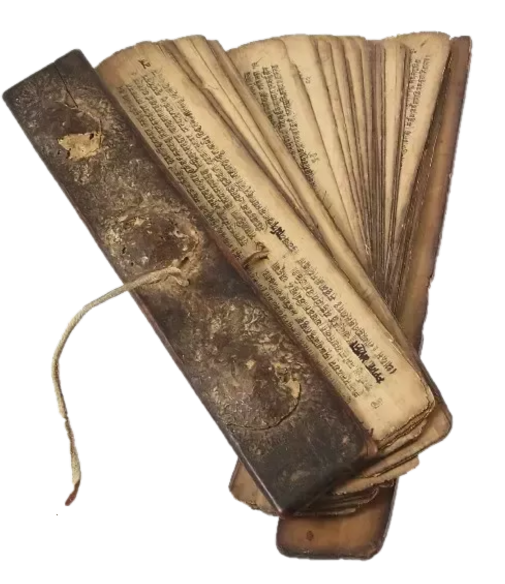
Taittirīyopaniṣat 01.13
भूर्भुवस्सुवरिति वा एतास्तिस्रो व्याहृतयः तासा मु ह स्मैतां चतुर्थीम्। माहाचमस्यः प्रवेदयते। मह इति। तद् ब्रह्म। स आत्मा। अङ्गान्यन्या देवताः ॥१३॥
bhūrbhuvassuvariti vā etās tisro vyāhṛtayaḥ tāsā mu ha smaitāṃ caturthīm। māhācamāsyaḥ pravedayate। maha iti। tad brahma। sa ātmā। aṅgāny anyā devatāḥ ॥13॥
[भूः (bhūḥ) - earth; भुवः (bhuvaḥ) - atmosphere; सुवः (suvaḥ) - heaven; इति (iti) - thus; वा (vā) - or; एताः (etāḥ) - these; तिस्रः (tisraḥ) - three; व्याहृतयः (vyāhṛtayaḥ) - sacred utterances; तासाम् (tāsām) - of these; उ (u) - indeed; ह (ha) - verily; स्म (sma) - truly; एताम् (etām) - this; चतुर्थीम् (caturthīm) - fourth; माहाचमस्यः (māhācamāsyaḥ) - of sage great Chamasa; प्रवेदयते (pravedayate) - teaches; मह (maha) - great; इति (iti) - thus; तत् (tat) - that; ब्रह्म (brahma) - Brahman; सः (saḥ) - he; आत्मा (ātmā) - Ātmān; अङ्गानि (aṅgāni) - limbs; अन्याः (anyāḥ) - other; देवताः (devatāḥ) - deities;]
The words 'bhūḥ', 'bhuvaḥ', and 'suvaḥ' are the three sacred utterances; indeed, the great sage Chamasa teaches the fourth, 'maha'. That is Brahman. He is the Ātmān. The other deities are his limbs.
Taittirīya Bhāshya 01.13
Lord Hari, who is the Lord of the Vedas, is clearly manifest from the immortal sounds of the Vedas. He is called 'Brahmakosha' i.e. the repository of Brahman, as he is the abode of the Vedas; is called 'Bhaga' as he is full of the six qualities; and is called 'Vibhu' as he possesses manifold forms. The four Vyahritis 'Bhū', 'Bhuvaḥ', 'Suva' and 'Maha' correspond to the Aniruddha, Pradyumna, Sankarshana, and Vāsudeva forms of the Lord, respectively. Each of them corresponds to the head, arms, feet, and the centre (heart).
"यो विश्वरूपो भगवान् छन्दसामधिपो हरिः। छन्दोभ्योऽमृतरूपेभ्यः सुव्यक्तस्तदुपासनात् ॥ मेधावी तत्त्वविज्ञानी भूत्वा क्षिप्रं विमुच्यते॥"
"yo viśvarūpo bhagavān chandasāmadhipo hariḥ। chandobhyo'mṛtarūpebhyaḥ suvyaktastadupāsanāt ॥ medhāvī tattvavijñānī bhūtvā kṣipraṃ vimucyate॥"
[यो (yaḥ) - who; विश्वरूपः (viśvarūpaḥ) - of universal form; भगवान् (bhagavān) - the Lord; छन्दसाम् (chandasām) - of the Vedas (metres); अधिपः (adhipaḥ) - the ruler; हरिः (hariḥ) - Hari (Viṣṇu); छन्दोभ्यः (chandobhyaḥ) - from the Vedas (metres); अमृतरूपेभ्यः (amṛtarūpebhyaḥ) - from the immortal forms; सुव्यक्तः (suvyaktaḥ) - clearly manifest; तत् (tat) - that; उपासनात् (upāsanāt) - from worship; मेधावी (medhāvī) - the intelligent one; तत्त्वविज्ञानी (tattvavijñānī) - knower of the truth; भूत्वा (bhūtvā) - having become; क्षिप्रं (kṣipram) - quickly; विमुच्यते (vimucyate) - is liberated;]
"He who is Hari, the Lord of the Vedas and of universal form, is clearly manifest from the immortal forms of the Vedas through worship. Such an intelligent one, having become the knower of the truth, is quickly liberated."
इति च।
iti ca।
[इति (iti) - thus; in this way; च (ca) - and / as well;]
- stated thus as well.
"वेदावासत्वतो विष्णुः ब्रह्मकोश इति स्मृतः। भगः षड्गुणपूर्णत्वात् बहुरूपत्वतो विभुः॥ सहस्रशाख इत्युक्तस्तमुपास्य जनार्दनम्। मुच्यते नात्र सन्देहः सर्वभोगैश्च युज्यते॥"
"vedāvāsatvato viṣṇuḥ brahmakosha iti smṛtaḥ। bhagaḥ ṣaḍguṇapūrṇatvāt bahurūpatvato vibhuḥ॥ sahasraśā kha ity uktas tam upāsya janārdanam। mucyate nātra sandehaḥ sarvabhogaiś ca yujyate॥"
[वेद (veda) - knowledge; आवास (āvāsa) - abode; त्वतः (tvataḥ) - from the state of; विष्णुः (viṣṇuḥ) - Viṣṇu; ब्रह्मकोश (brahmakosha) - repository of Brahman; इति (iti) - thus; स्मृतः (smṛtaḥ) - is remembered; भगः (bhagaḥ) - Bhaga; षड्गुण (ṣaḍguṇa) - six qualities; पूर्णत्वात् (pūrṇatvāt) - due to fullness; बहु (bahu) - many; रूपत्वतः (rūpatvataḥ) - from the state of forms; विभुः (vibhuḥ) - the all-pervading; सहस्रशाख (sahasraśākha) - thousand-branched; इति (iti) - thus; उक्तः (uktaḥ) - said; तम् (tam) - him; उपास्य (upāsya) - having worshipped; जनार्दनम् (janārdanam) - Janardana (epithet of Vishnu); मुच्यते (mucyate) - is liberated; न (na) - not; अत्र (atra) - here; सन्देहः (sandehaḥ) - doubt; सर्वभोगैः (sarvabhogaiḥ) - with all enjoyments; च (ca) - and; युज्यते (yujyate) - is united;]
Viṣṇu is called 'Brahmakosha' i.e. the repository of Brahman, because he is the abode of the Vedas (knowledge); 'Bhaga', being full of the six qualities; and 'Vibhu', as he possesses manifold forms. It is said that whoever worships Janardana, who is described as 'Sahasraśākha' i.e. thousand-branched, is surely liberated and enjoys all pleasures; there is no doubt about this.
इति प्रक्लृप्ते।
iti praklṛpte।
[इति (iti) - thus; in this way; प्रक्लृप्ते (praklṛpte) - having been arranged; having been prepared;]
- stated thus in the ancient text called 'Praklṛpte'.
"आवहन्ती चिरं सर्वभोगान् या श्रीस्सनातनी। तां मय्यावह गोविन्द सुशिखण्डोपशोभिताम्॥"
"āvahantī ciraṃ sarvabhogān yā śrīssanātanī। tāṃ mayyāvaha govinda suśikhaṇḍopaśobhitām॥"
[आवहन्ती (āvahantī) - bringing; चिरं (ciraṃ) - for a long time; सर्वभोगान् (sarvabhogān) - all enjoyments; या (yā) - who; श्रीः (śrīḥ) - prosperity; सनातनी (sanātanī) - eternal; ताम् (tām) - her; मयि (mayi) - unto me; आवह (āvaha) - bring; गोविन्द (govinda) - Govinda; सुशिखण्डोपशोभिताम् (suśikhaṇḍopaśobhitām) - adorned with beautiful crest-feathers;]
"O Govinda, bring unto me that eternal Śrī (prosperity), adorned with beautiful crest-feathers, who brings all enjoyments for a long time."
इति च ॥१२॥
iti ca ॥12॥
[इति (iti) - thus; in this way; च (ca) - and / as well;]
- stated thus.
भूरादि व्याहृतीभिस्तु वाच्यं मूर्तिचतुष्टयम्। अनिरुद्धादिकं वासुदेवान्तं देहमध्यगः॥
bhūrādi vyāhṛtībhistu vācyaṃ mūrticatuṣṭayam। aniruddhādikaṃ vāsudevāntaṃ dehamadhyagaḥ॥
[भूरादि (bhūrādi) - beginning with Bhū; व्याहृतीभिः (vyāhṛtībhiḥ) - with the Vyāhṛtis; तु (tu) - but; वाच्यं (vācyaṃ) - to be spoken; मूर्ति (mūrti) - form; चतुष्टयम् (catuṣṭayam) - the fourfold; अनिरुद्धादिकं (aniruddhādikam) - beginning with Aniruddha; वासुदेवान्तं (vāsudevāntam) - ending with Vāsudeva; देह (deha) - body; मध्यगः (madhyagaḥ) - situated in the middle;]
The fourfold form, starting from Bhū and the other Vyāhṛtis, should be described; these forms correspond from Aniruddha to Vāsudeva (Aniruddha, Pradyumna, Sankarshana, and Vāsudeva), and are situated in the middle of the body.
वासुदेवो महोनामा त्वनिरुद्धश्शिरो मतः। भूर्नामाथ भुवोनामा बाहू प्रद्युम्न ईरितः॥
vāsudevo mahonāmā tvaniruddhaśśiro mataḥ। bhūrnāmātha bhuvonāmā bāhū pradyumna īritaḥ॥
[वासुदेवः (vāsudevaḥ) - Vāsudeva; महत्-नाम (mahat-nāma) - great-named; त्व (tva) - but; अनिरुद्धः (aniruddhaḥ) - Aniruddha; शिरः (śiraḥ) - head; मतः (mataḥ) - is considered; भूः-नाम (bhūḥ-nāma) - named Bhūḥ; अथ (atha) - then; भुवः-नाम (bhuvaḥ-nāma) - named Bhuvaḥ; बाहू (bāhū) - arms; प्रद्युम्नः (pradyumnaḥ) - Pradyumna; ईरितः (īritaḥ) - is said;]
Vāsudeva is called 'Maha', the great one , but Aniruddha is regarded as the head, denoted by the sound 'Bhūḥ'. The arms are said to be Pradyumna, denoted by the sound 'Bhuvaḥ'.
सङ्कर्षणस्सुवर्नामा पादौ तस्य महात्मनः। अनन्योऽप्यन्यशब्देन चतुरात्मा प्रकीर्त्यते॥
saṅkarṣaṇassuvarnāmā pādau tasya mahātmanaḥ। ananyo'pyanyaśabdena caturātmā prakīrtyate॥
[सङ्कर्षणः (saṅkarṣaṇaḥ) - the one who draws together; सुवर्नामा (suvarnāmā) - having a good name; पादौ (pādau) - feet (dual); तस्य (tasya) - of him; महात्मनः (mahātmanaḥ) - of the great-souled one; अनन्यः (ananyaḥ) - not another; अपि (api) - also; अन्यशब्देन (anyaśabdena) - by the word 'anya'; चतुरात्मा (caturātmā) - having four forms; प्रकीर्त्यते (prakīrtyate) - is proclaimed;]
Saṅkarṣaṇa is regarded as the feet, denoted by the sound 'Suva'; that essence is also called 'Maha'; as he is also donated by the word 'Anya' i.e. 'another'; and is proclaimed to have four forms.
निर्विशेषोऽपि भगवान् सङ्ख्यामात्रविशेषतः ॥१३॥
nirviśeṣo'pi bhagavān saṅkhyāmātraviśeṣataḥ ॥13॥
[निर्विशेषः (nirviśeṣaḥ) - without distinction; अपि (api) - even; भगवान् (bhagavān) - the Lord; सङ्ख्यामात्रविशेषतः (saṅkhyāmātraviśeṣataḥ) - by mere difference in number;]
Even though the Lord is without distinction, He is considered distinct only by the difference in number.