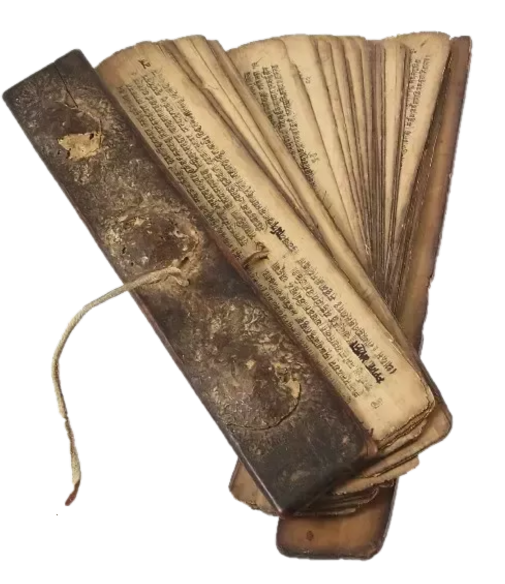
Brahmasūtra Aṇu-Bhāṣya (ब्रह्मसूत्राणुभाष्यम्)
Chapter Two (द्वितीयोऽध्यायः॥)
Because such denial contradicts Śruti and Smṛti, the Smṛti texts could not deny Hari’s qualities. Because of their eternality, the Vedas are the highest authority.(1)
Because it is uttered by a deity, the statement “the waters speak,” and others like it, is not unreasonable. Non-being is nowhere observed as a cause.(2)
Wherever words such as “non-being,” “the individual self,” and “primordial matter” are used with reference to causality, they designate Brahman alone and nothing else; Hari possesses attributes in their fullness.
Because of his independence and his being the maker of all, it is not unreasonable for scripture to speak thus. Since all systems are rooted in error and are therefore untenable, a Vedic statement should not be considered doubtful because it conflicts with them. Everything beginning with space is born from Him and is dissolved by Him alone.(4-5)
He is the creator, without origination or dissolution. The jīva, a likeness of him, is always subject to him. Hari is always the same even in all forms.(6)
The chief vital breath, the senses, and indeed the body arise from him. Everything is under the control of the chief vital breath; he is always subject to Viṣṇu’s control.(7)
Therefore, Bhagavān, the Supreme Person, is devoid of all defects; and his qualities, as stated by the Veda, are free from contradiction in every respect.(8)
Thus ends the second chapter.

...

बहुचित्रजगद्बहुधाकरणात् परशक्तिरनन्तगुणः परमः ।
सुखरूपममुष्य पदं परमं स्मरतस्तु भविष्यति तत्सततम् ॥
"The one who has created this variegated vast universe with varied forms has infinite power and is of infinite auspicious qualities. He certainly bestows the highest state of bliss to those who meditate on his ever happy essence." -Dwādasha stōtra 4.3

Source and Copyright: The Sanskrit works of Madhvacharya reproduced here are ancient public-domain texts. Digital Sanskrit sources are acknowledged wherever applicable. The English translations, explanatory notes and original editorial material on madhva.in are © Madhukrishna Sudhindra, unless otherwise indicated.