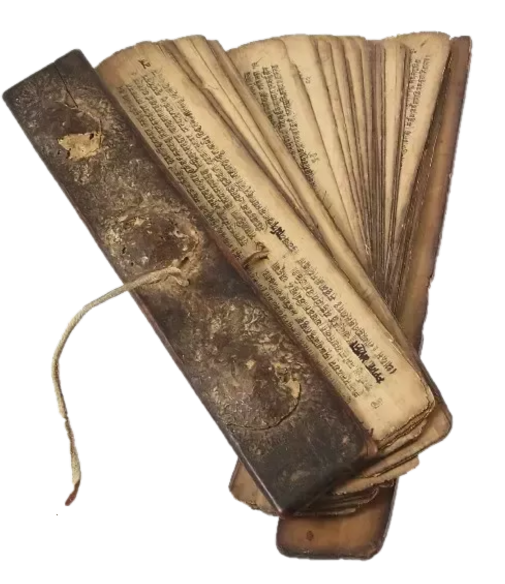
- Taittirīyopaniṣat 01.01
Om. Auspiciousness to us from Mitra, auspiciousness from Varuṇa. May Aryamā be auspicious to us. May Indra and Bṛhaspati be auspicious to us. May Viṣṇu of wide stride be auspicious to us.
Salutation to Brahman. Salutation to you, O Vāyu. You indeed are the directly perceivable Brahman. You indeed, I shall declare as the directly perceivable Brahman.
I shall declare ṛta (cosmic order). I shall declare satya (truth). May that protect me. May that protect the speaker. May it protect me. May it protect the speaker.
Om. Peace, peace, peace.
- Taittirīyopaniṣat 01.02
Oṃ. We shall explain phonetics: letters and sounds, measure, strength, intonation, and continuity. Thus is said the chapter on phonetics.
- Taittirīyopaniṣat 01.03
May we both attain glory together. May we both attain spiritual radiance together. Now, therefore, we shall explain the Upaniṣad (secret teaching) of the Saṃhitā. It is in five topics: concerning the worlds, concerning the luminaries, concerning the knowledge, concerning the progeny, and concerning the self. These they call the great Saṃhitās. Thus (it is said).
- Taittirīyopaniṣat 01.04
Now, concerning the worlds: the earth is the prior form, heaven is the latter form, space is the junction, air brings them together; thus is the teaching regarding the worlds.
- Taittirīyopaniṣat 01.05
Now, with regard to astrology: fire is the prior form, the sun is the latter form, waters are the junction, lightning brings them together; thus ends the section on astrology.
- Taittirīyopaniṣat 01.06
Now, regarding knowledge: the teacher is the initial aspect, the student is the subsequent aspect, knowledge is the junction, and teaching brings them together; thus is knowledge described.
- Taittirīyopaniṣat 01.07
Now, regarding offspring: the mother is the prior form, the father is the subsequent form; the offspring is the union, and procreation brings them together. Thus is the teaching concerning offspring.
- Taittirīyopaniṣat 01.08
Now, concerning the 'adhyātma', i.e. spirituality: the lower jaw is the earlier form, the upper jaw is the latter form, speech is the junction, the tongue brings them together; thus is the teaching about the 'adhyātma', i.e. spirituality.
These are great collections. Whoever knows these great collections as explained is united with progeny, cattle, spiritual brilliance, food and drink, and the heavenly world.
- Taittirīyopaniṣat 01.09
These (Vedic) meters which are of universal form. By chanting these (Vedic) meters, which have descended from above, let's together attain immortality. May that Lord of the senses fill me with intelligence. May I become the wearer of that immortal Lord. May my body be active. May my tongue be most sweet. By the two ears may I hear much. Your intelligence covers the Brahmana portion of the Vedas. Hearing that, let me be protected.
- Taittirīyopaniṣat 01.10
"By spreading, I invite. Provide me always with bark-garments, shelter, cows, food, and drink. Then bring prosperity to me. Offering, together with hairy animals."
- Taittirīyopaniṣat 01.11
"Invoking the syllable 'Aa', i.e. auspicious expansion, may the brahmachārins (students) come to me, Offering!
Invoking the syllable 'Vi', i.e. distinguished particularity, may the brahmachārins (students) come to me, Offering!
Invoking the syllable 'Pra', i.e. with directedness and intensity, may the brahmachārins (students) come to me, Offering!
Invoking the syllable 'Da', i.e. self-control, may the brahmachārins (students) come to me, Offering!
Invoking the syllable 'Sha', i.e. tranquillity, may the brahmachārins (students) come to me, Offering!
Glory to all the people, Offering!
Let there be enhanced prosperity, Offering!
O Lord, may I enter you, Offering!
O Lord, may you enter me, Offering!
In that thousand-branched (body); O Lord, I cleanse myself in you, Offering!
- Taittirīyopaniṣat 01.12
Just as waters flow downward and months wear away the days, so may the brahmachārins (students), the sustainers, come to me from all directions. Offering! You are the neighbour; may your radiance never leave us; do not depart from our hearts.
- Taittirīyopaniṣat 01.13
The words 'bhūḥ', 'bhuvaḥ', and 'suvaḥ' are the three sacred utterances; indeed, the great sage Chamasa teaches the fourth, 'maha'. That is Brahman. He is the Ātmān. The other deities are his limbs.
- Taittirīyopaniṣat 01.14
"Bhūḥ" is 'this' world. "Bhuvaḥ" is the 'antarikṣa', the inner witness. "Suvaḥ" is 'that' world, (established in the vital breadth). "Mahaḥ" is the 'aditya', the sun, in which he is established. By the sun, indeed, all worlds are made great.
"Bhūḥ" is fire; "Bhuvaḥ" is wind; "Suvaḥ" is the sun; "Mahaḥ" is the moon. Indeed, by the moon all lights are magnified.
The Ṛg Veda hymns are called "Bhūḥ", the Sāma Veda chants are "Bhuvaḥ", the Yajur Veda formulas are "Suvaḥ", and "Mahaḥ" is Brahman. By Brahman, indeed, all the Vedas are exalted.
"Bhūḥ" is verily 'prāṇa', the vital breath that is inhaled; "Bhuvaḥ" is 'apānaḥ', the exhalation, or downward-life force; "Suvaḥ" is 'vyānaḥ' the life force that digests; "Mahaḥ" is food. Indeed, by food all the life-breaths are magnified.
Namely, these fourfold are the four Vyāhṛtis. Whoever knows them, he knows Brahman. All the gods bring offerings to him.
- Taittirīyopaniṣat 01.15
He who is in this space within the heart, is this (first) person composed of mind, who is immortal and golden. Within the palate, this (second) one hangs like a breast and is the passage of Indra. (The third one is situated) where the end of the hair turns apart. (The fourth,) indeed, pervades the skull-plates.
- Taittirīyopaniṣat 01.16 and 17
"Bhūḥ" abides in fire, "Bhuvaḥ" in air, "Suvaḥ" in the sun, "Maḥ" in Brahman. He attains his own sovereignty; attains lordship of the mind; lordship of speech; lordship of the eye; lordship of the ear; and lordship of the knowledge. This becomes from that.
Brahman has the body of space. Its essence is truth, the abode is breath, and its bliss is that of the mind. It is filled with peace and is immortal. Thus, the ancient and worthy ones meditate upon it.
- Taittirīyopaniṣat 01.18
Earth, atmosphere, sky, directions, and intermediate directions; fire, wind, sun, moon, and stars; waters, herbs, trees, space, and ego-principle — these are the elements. Now, pertaining to spiritual knowledge (adhyātmam): prāṇa, vyāna, apāna, udāna, and samāna; eye, ear, mind, speech, and skin; hide, flesh, sinews, bone, and marrow. Having arranged these, the sage declared: "All this is indeed fivefold. By the fivefold alone, the fivefold is completed."
- Taittirīyopaniṣat 01.19
"Om" is Brahman. "Om" is all this. With "Om" as this imitation, indeed, verily, the priests make (someone) hear, thus they make (someone) hear. With "Om" they sing the Sāman chants. With "Om" and "Sham" they recite the hymns of praise. With "Om" the Adhvaryu priest accepts the response. With "Om" the Brahmana priest initiates. With "Om" Agni permits the oblation. With "Om" the knower of Brahman, about to declare, says, "I have attained Brahman." He indeed attains Brahman.
- Taittirīyopaniṣat 01.20
Acquiring 'as-is knowledge', self-study, and imparting knowledge are the duties. Speech and conduct in tune with perceived 'as-is knowledge', self-study, and imparting knowledge are the duties. Meditating on such truths, worship of the venerable, self-study, and imparting knowledge are the duties. Self-control, self-study, and imparting knowledge are the duties. Engaging in tranquil activities, self-study, and imparting knowledge are the duties. Having humane conduct, self-study, and imparting knowledge are the duties. Procreation, self-study, and imparting knowledge are the duties. Providing excellent birth, self-study, and imparting knowledge are the duties. Protection of the offspring, self-study, and imparting knowledge are the duties.
- Taittirīyopaniṣat 01.21
Satyavacā Rāthītaraḥ, one who always speaks truth, said, "satyam", i.e. "truth". Taponityaḥ Pauruśiṣṭiḥ, one who is always engaged in austerity, said, "tapah", i.e. "austerity". Nāka Maudgalyaḥ said, "study and imparting knowledge alone". That indeed is austerity, that indeed is austerity.
- Taittirīyopaniṣat 01.22
"I am the essence of the tree (of worldly existence); my fame is as the mountain's summit. I got purified and got elevated by the swift horse Vājinīvasu, (i.e. the one whose wealth is horses, i.e. Lord Vishnu abiding in the Sun). Because of which I have become immortal, wealthy, radiant, wise, and anointed with nectar" - Thus is the Vedic utterance of Triśaṅku.
- Taittirīyopaniṣat 01.23
After reciting the Veda, the teacher instructs the student: "Speak the truth. Practice righteousness. Do not be negligent of the truth. Do not be negligent in righteousness. Do not be negligent of welfare. Do not be negligent of prosperity. Do not be negligent in study and teaching. Do not be negligent of duties to gods and ancestors."
Regard your mother as a god. Regard your father as a god. Regard your teacher as a god. Regard your guest as a god.
You should follow only those actions which are blameless, not others. Which among us are good conduct, those are to be respected by you; not the others. Whoever our superiors among the Brāhmaṇas, in their presence, you should not breathe out, i.e. be controlled and respectful.
One should give with faith; it should be given even without faith; it should be given with prosperity; it should be given with modesty; it should be given with fear (of wrongdoing); it should be given with understanding.
- Taittirīyopaniṣat 01.24
Now, if there should be doubt regarding your action or doubt regarding conduct, (observe) those Brāhmaṇas there who are deliberative, competent, (even if) incompetent, not harsh, desiring dharma; and you should act as they would act there. Thus we have declared now.
Among the Brāhmaṇas there who are deliberative, whether engaged or not, gentle and desirous of righteousness, as they conduct themselves among them, so should you conduct yourself among them.
This is the injunction. This is the instruction. This is the Vedic Upaniṣad. This is the command. Thus it should be meditated upon. Thus, this should be worshipped.
- Taittirīyopaniṣat 01.25
May Mitra bring us auspiciousness; may Varuṇa bring us auspiciousness. May Aryaman grant us auspiciousness. May Indra and Bṛhaspati bring us auspiciousness. May Lord Viṣṇu, the wide-striding, bring us auspiciousness.
Obeisance to Brahman. Obeisance to you, O Vāyu. You alone are the directly perceivable Brahman. You alone I have declared as the directly perceivable Brahman. I have declared the as-is reality. I have declared the truth. May that protect me. May that protect the speaker. May it protect me. May it protect the speaker.
oṃ, peace, peace, peace.